
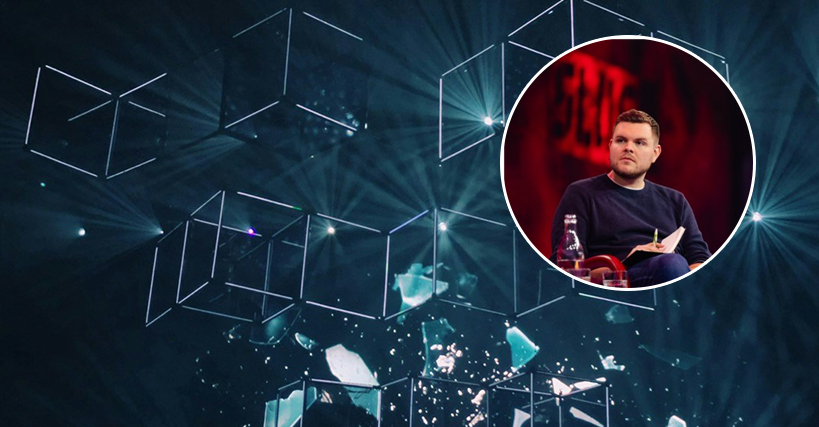
Entrepreneur Pim de Witte, once known across the RuneScape private server (RSPS) community as the creator of SoulSplit, has reportedly turned down a $500 million acquisition offer while steering his creator platform Medal.tv and his AI company General Intuition into the global AI race — with ambitions to compete directly with giants like OpenAI.
The story has stunned both the gaming and tech worlds: a former RSPS developer declining a half-billion-dollar exit to build his own AI empire.
From accidental coder to global phenomenon
Pim’s journey began at the age of 13, when he taught himself how to program out of boredom during a long car ride to Italy.
A year later, he launched a relatively simple online game that would unexpectedly explode in popularity: SoulSplit, a RuneScape private server that quickly grew into a worldwide hit.
- By age 14, SoulSplit was generating over €10,000 per month in revenue.
- By age 19, Pim headed a company with roughly 30 employees, most of them teenagers and young adults.
- The company reported an annual revenue of around $1 million.
- Its headquarters was based in The Netherlands.
- The game attracted a global audience of millions of players.
While SoulSplit dominated the RSPS top lists, Pim and his team in Nijmegen were already working on new projects, including a game called Soulblocks and other software tools. Pim also worked on technology for humanitarian purposes, such as systems for Doctors Without Borders to better coordinate data in crisis regions.
De Witte explained that SoulSplit ultimately shut down in 2015 after RuneScape, the game SoulSplit was based on, came under new ownership that took a far stricter stance toward private servers.
From SoulSplit to Medal.tv
After leaving the RSPS world behind, Pim transitioned further into the tech startup ecosystem and eventually co-founded Medal.tv, a platform that helps gamers capture, edit, share and analyse gameplay clips.
Over time, Medal.tv grew into one of the largest game-clip ecosystems in the world, generating a massive and unique dataset consisting of:
- Player behaviour and decision-making patterns.
- Movement and positioning within complex game environments.
- Visual sequences of real-time gameplay.
- Interactions between multiple players and agents.
These datasets, originally collected to power social and creator features, are now at the core of Medal’s pivot toward artificial intelligence research. They are used to train AI models that can understand dynamic, interactive environments — in contrast to traditional AI systems trained primarily on text and static images.
As Medal.tv grew, De Witte launched a separate AI-focused company called General Intuition, built around applying Medal’s behavioural datasets to large-scale machine-learning research.
Today, De Witte splits his focus between Medal.tv, the gaming platform generating the behavioural data, and General Intuition, the AI research company built to turn that data into next-generation models capable of competing with the world’s largest labs.
Turning down a $500 million offer
De Witte confirmed that the acquisition offer — valued at roughly $500 million — targeted his AI company General Intuition, which uses Medal.tv’s behavioural data for cutting-edge model training.
Industry speculation has linked the offer to OpenAI, which are aggressively seeking high-quality proprietary datasets to train their next-generation models.
Rather than accepting what would be a life-changing payout for most founders, Pim chose to keep General Intuition independent.
“Selling now would mean giving up the future. We want to build something that can stand next to OpenAI — not be absorbed into it.” He explained, referring to General Intuition’s long-term AI ambitions.
Medal.tv’s AI strategy: Competing where OpenAI is weak
Medal.tv’s core thesis is bold: the next wave of AI breakthroughs will be driven not just by text-based learning, but by behavioural data — how humans move, react and make decisions in complex digital worlds.
Where companies like OpenAI, Google DeepMind and Anthropic built their early success on large-scale text corpora and image datasets, Medal.tv focuses on:
- Live gameplay footage.
- High-frequency movement and control inputs.
- Complex multi-agent scenarios.
- Real-time strategic decision-making.
This type of data enables the training of AI models that can develop a more intuitive understanding of:
- 3D environments and spatial awareness.
- Physics and cause-and-effect relationships.
- Multi-agent systems, such as teams and opponents in online games.
- Real-time adaptation to changing situations.
In short, while OpenAI’s roots are in language and static content, Medal.tv aims to train models that understand action, motion and interaction.
How the RSPS era shaped an AI founder
To many outside the gaming scene, Pim’s RSPS background might seem like a footnote. But within the industry, it is seen as a powerful foundation for his current role in AI.
His years running SoulSplit gave him early hands-on experience with:
- Managing global online communities.
- Designing and maintaining virtual economies.
- Scaling infrastructure and operations for millions of users.
- Leading distributed development teams at a young age.
- Building and iterating on commercial systems under intense community pressure.
The skills developed in the RSPS era — rapid iteration, monetisation, community management and game systems design — now carry over directly into the world of high-growth technology and AI research.
A founder who refuses the easy path
For most entrepreneurs, a $500 million offer would be the end of the story. For Pim de Witte and General Intuition, it appears to be only the beginning.
By declining the buyout, Pim signalled that he believes General Intuition can become more than a feature or data source inside someone else’s platform. Instead, he wants it to grow into a leading AI player in its own right, built on a unique foundation of behavioural and gameplay data.
Whether General Intuition will ultimately rival OpenAI and other global AI labs remains to be seen. But one thing is already clear:
The teenager who once ran RSPS server SoulSplit is no longer just a former RSPS owner. He is now a founder confident enough to turn down half a billion dollars — and bold enough to challenge the very top of the AI industry.